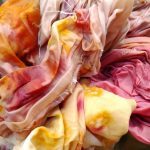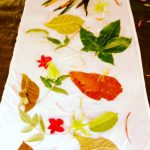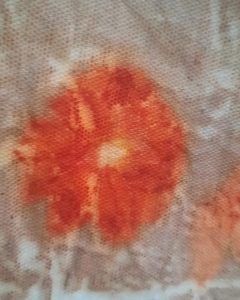
Eco printing is a natural textile printing technique that transfers the shapes and pigments of leaves, flowers, fruits, seeds, wood, roots, and other botanical materials onto natural fabrics.
The principle of eco printing is to activate the natural pigments and compounds within these materials, allowing them to react with the fabric and create prints that reflect their original colors and shapes, or artistic compositions carefully arranged by the artisan.
The transfer process is commonly achieved by applying heat through steaming or boiling. Other methods include exposing the fabric to sunlight, burying it in the soil, or using controlled heat from a fire.
In addition to heat-based methods, eco printing can also be created using the pounding technique, where botanical materials are gently hammered onto the fabric to transfer their natural pigments and patterns.
Each technique produces its own distinctive textures, colors, and visual characteristics, resulting in unique fabric designs.
Eco printed botanical impressions are naturally soft and delicate. However, they can be enhanced by using mordants such as iron sulfate (ferrous sulfate), also known as rustic or tunjung, to create sharper details and deeper, more intense colors.